
Written by Kyana Fuchs
In every school community, there are moments when compassion and action come together to create meaningful change. Such was the case when a teacher’s observation and concern for a family’s situation ignited a chain of events that uncovered the power of empathy and the determination to lend a helping hand.
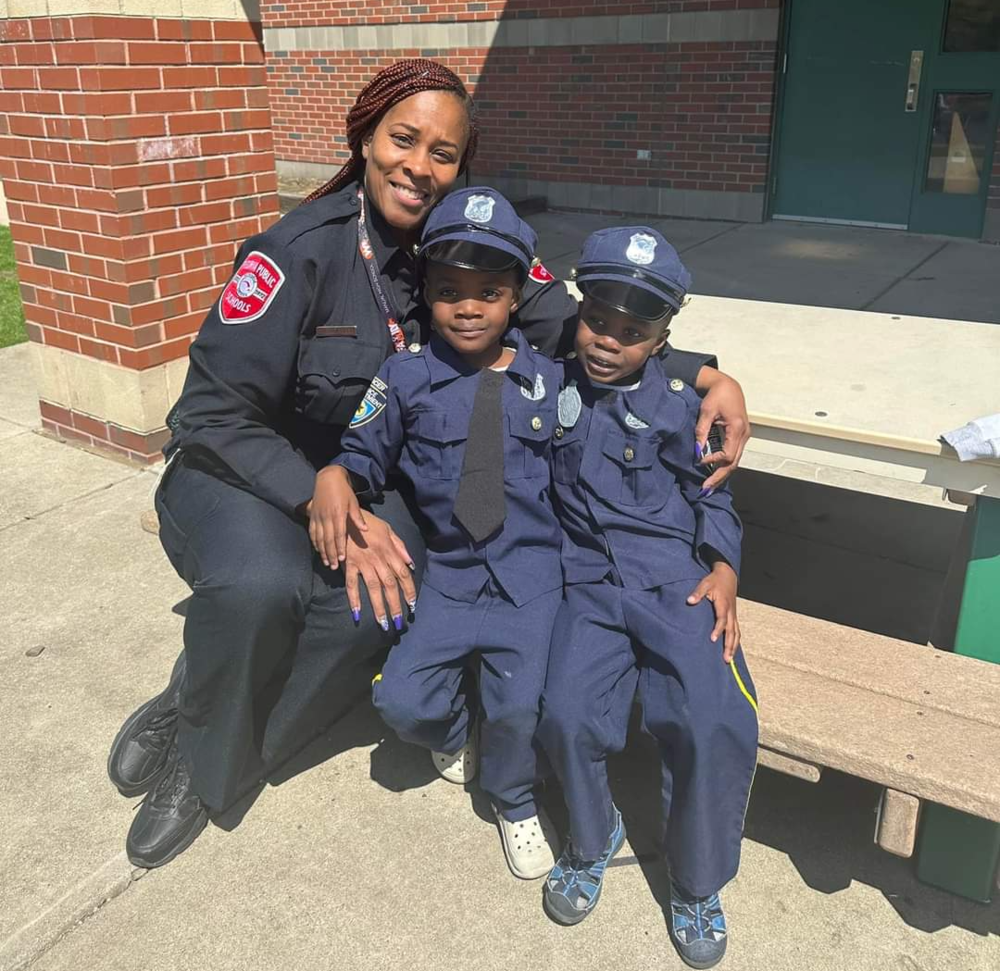
Our story begins with a simple observation: a parent walking her child to school using a stroller that held a suitcase and a blanket. This sight struck one observant teacher as unusual and raised concerns about the family’s well-being. Sensing the situation called for further investigation, the teacher shared her concerns with the school's principal and school resource officer (SRO), Officer Nathan Bell.
While the initial suggestion was to contact the Department of Children and Family Services (DCFS), Officer Bell decided to push pause and take a more empathetic approach. “Let me handle this first,” she said, choosing to approach the situation with understanding rather than rushing into an investigation. “We all perceive things differently, and that’s not to say that you’re right or I’m wrong.” What followed was a compassionate inquiry that revealed the complexities of the parents’ life. The parent was living in a transitional housing facility and carried her belongings in the stroller to protect them from theft. The blanket provided extra comfort for her child on their walks to school.
Far from being neglectful, the parent’s actions were grounded in care and resourcefulness. She was navigating a challenging situation while ensuring her child’s regular school attendance, a testament to her commitment to providing stability despite her tough situation. Recognizing this, Officer Bell reached out to the parent directly.
Through an open and candid conversation, the parent’s story unfolded. She explained her circumstances, including her child’s medical needs and her efforts to access meals and resources at local community centers. Officer Bell continued to build a relationship and trust. It became clear that this family did not need intervention, they needed support.
Determined to help, Officer Bell contacted an apartment complex known for its second-chance program and explained the parent’s situation. The manager agreed to consider the parent’s application, setting the wheels in motion for a potential fresh start. Taking it a step further, the officer personally escorted the parent to the complex during her lunch break to ensure the application process went smoothly.
Days later, the parent received an email inviting her to continue to the next phase of the application process. It was a breakthrough moment, signifying hope and progress toward securing stable housing. The Officer Bell's response? Excitement. “My goal is to just help one,” she said. “If I help one, I’ve helped them all.”
This story is a reminder of the profound impact that a single act of kindness can have. By choosing empathy over assumptions and action over inaction, Officer Bell not only avoided unnecessary intervention but also became a lifeline for a family in need. It is a powerful example of how schools can be more than places of learning—they can be beacons of hope.
As this parent moves closer to a brighter future, her story serves as an inspiration. It’s a testament to the importance of building relationships, asking the right questions, and remembering that every family’s story is unique. In the end, it’s these connections that make a difference—one family at a time.